
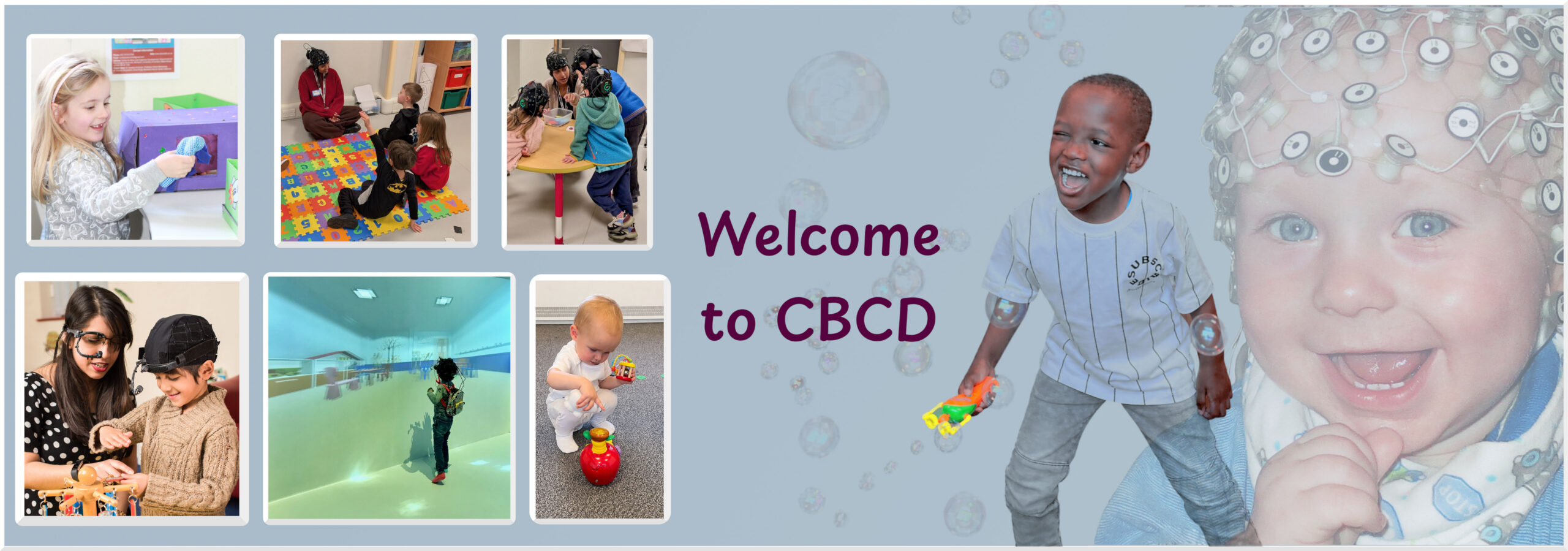
The Context Lab studies the role of the environment in infant and child development.
Development occurs in the middle of everything! There is no time during which a baby or a child is developing without any interactions with their environment, their families, or the world around them. In order to study infant and child development we need to consider all contexts within which the child grows and changes. Some of our current projects are investigating:
How does visual attention change depending on the context? Using eye-tracking and fNIRS we are looking at attentional distraction, and learning occurs in noisy environments.
How is school-readiness affected by early home context? Using both quantitative and qualitative measures, we are asking about how family make-up, resource-access, and neighbourhood factors affect early working memory and selective attention development.
What is the effect of a visual language? Does it make visual attention faster? More effective? In a new line of research, we are thinking about how infants, children, and adults who are exposed to British Sign Language perceive the world around them.
Research Team:
Professor Natasha Kirkham – Director and President of the International Congress of Infant Studies
Linda Cerminara – PhD student, co-supervised with Prof Ori Ossmy
Linda’s work is focussed on the cognitive effects associated with being a new parent. She is looking at the sustained cognitive and neural adaptations shaped by the changed environment, and ongoing caregiving experiences.
Helen Grimshaw – PhD student, co-supervised with Prof Denis Mareschal
Helen’s PhD addressed how socioeconomic status and home environment affect aspects of school-readiness (executive functions).
Judit Sebok – PhD student, co-supervised with Prof Daniel Richardson
Judit’s PhD investigated the role of rhythmic synchrony in prosocial development, looking at different types of synchrony.