
Below is a selection of current research projects at CBCD – this list is not comprehensive. Contact study directly or babylab@bbk.ac.uk to take part. Everyone registered on our participant database will receive invites to take part when their baby/child matches the age and selection criteria for any of our studies.
The SENSOR project
The SENSOR project seeks to understand the brain and cognitive mechanisms that drive individual differences in sensory processing and responsivity in toddlers, and the impact of sensory processing differences on early development.
BabyMIND study
Our research focuses on understanding how babies’ brains use energy in response to social interactions and sensory experiences.
Empathy Project
The Empathy Project aims to understand the early development of empathy in young children. By uncovering the factors that promote the development of empathy, we can help foster these skills in children who have difficulties in social interactions.
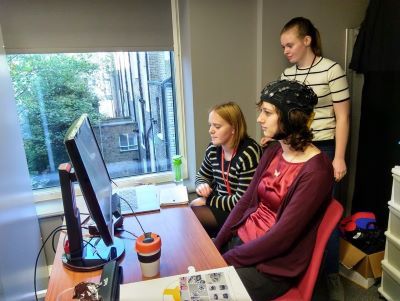
BONDS
Our team combines behavioural observations and information recorded with child-friendly neuroimaging techniques to see how the children’s brain responds to what they hear and see.
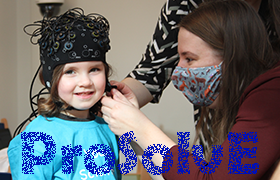
ProSolvED
The Problem Solving in Early Development project studies how the development of behaviour and brain when toddlers and preschoolers are solving a problem in interaction with another person.

Pet Puzzles study
Pet Puzzles is a research project looks at the development of planning abilities in real-life situations in 2- to 5-year-olds.
In this study children play in a unique game, where they gather information from their environment, freely moving around and using the collected information to solve a problem. Contact babylab@bbk.ac.uk to take part.
Basis
BASIS The British Autism Study of Infant Siblings (BASIS) is a collaborative research network for studying the development of brothers and sisters of children diagnosed with Autism Spectrum Disorder (ASD).

BRIGHT
The Brain Imaging for Global Health project is a longitudinal collaboration of researchers from UCL, Birkbeck, KCL and the MRC Gambia, examining developmental trajectories of babies over the first 1000 days of life.

SNAP: Sensory Activity in Preschoolers
Touch plays an important role in perception and early social and communicative development. This study looks at 3-6 year olds with ASD to analyse brain and tablet-based touch responses in order to make a subject-specific sensory-profile.
NeuroCAVE
We aim to make science more inclusive and promote understanding of neurodevelopmental differences. We are making our virtual reality room more accessible to all neurodiverse children! We’re inviting children aged 3 to 6, neurotypical or with ASD and/or ADHD, to join our study. Sneak peek video!

Stay Cool
The Stay Cool study is a follow-up to the STAARS project, investigating the development of self-regulation in participants aged 4-9. The study uses fun play-based activities along with a variety of methods to assess children’s brain, body and behaviour.
Eden Project
In collaboration with the University of Manchester, we study the behavioural development of babies with NF1 and seek to identify early markers of Autism and ADHD.
STAARS
The Studying Autism and ADHD Risks will be specifically researching the early development of baby brothers and sisters of children with autism spectrum disorders, attention deficit disorders and typical development.

The SENSE Study
The SENSE Study is a collaboration between UCL, UCL Hospital, and Birkbeck, investigating how full-term and preterm babies (born before 37 weeks) respond to touch. We’re looking at how these early experiences influence brain development, behaviour, and sensory skills into toddlerhood.
PhD Programme: AI & Child Development
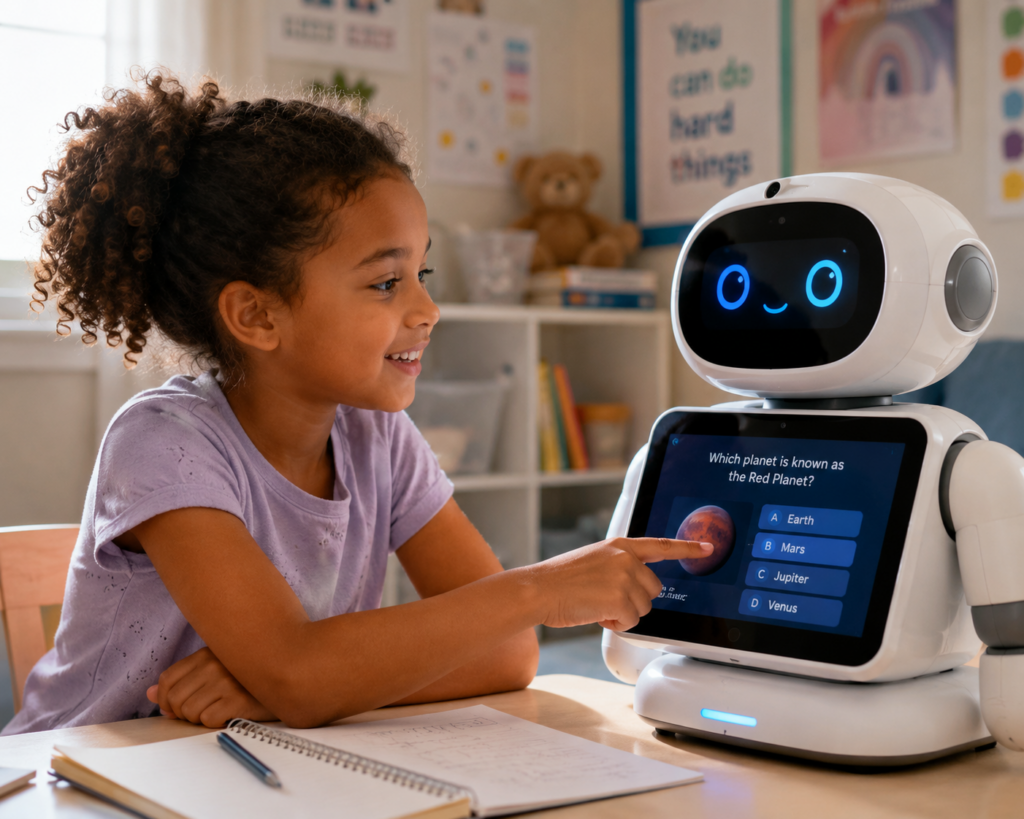
This brand new PhD programme will address urgent questions about how AI-enabled technologies are reshaping childhood, from learning and curiosity to social development and family life. By generating robust evidence in this emerging field, the programme will help provide
guidance for parents, educators and policymakers on the responsible use of AI to improve children’s developmental outcomes, while helping to ensure children and young people are equipped with the skills they need to thrive in an increasingly AI-driven world.
LEAVES study
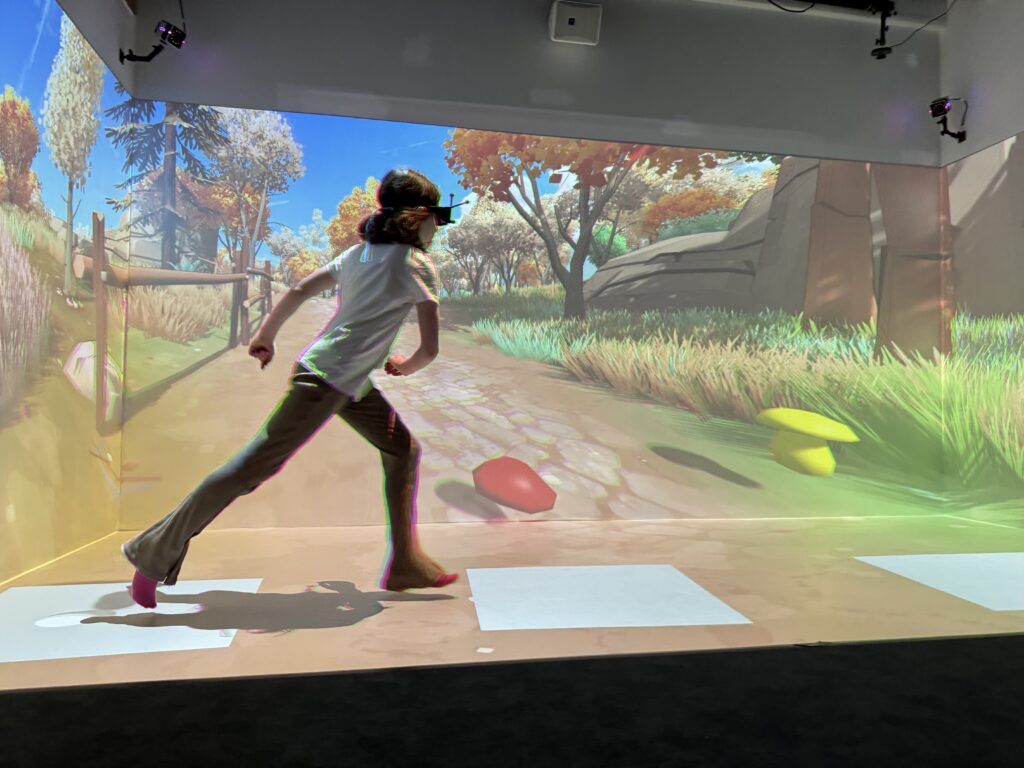
In the LEAVES study, we are investigating the relationship between physical activity and cognition in children ages 7-11, who are awaiting an ADHD diagnosis or have one.
In this study, children perform some fun movement-based activities and short computer tasks. Contact babylab@bbk.ac.uk to take part.

EDiTS
In collaboration with King’s College London, we study the early development of babies with Tuberous Sclerosis (TSC) to learn more about the condition with an aim of improving outcomes.
INTERLEARN
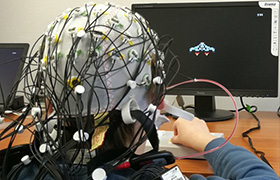
The INTERLEARN programme successfully trained a cohort of five PhD students who led a new European-wide initiative to deliver technologically advanced and scientifically rigorous individualised learning paradigms.


SAPIENS
SAPIENS is a collaborative and unique European network that trained a cohort of 15 international PhD students who successfully led projects of excellence into the study of early social brain development and the mechanisms of early social interactions between infants and caregivers.

TrackDev
Open Tracking Early Human Development, from Basic Science to Applications
Early Life Cohort Feasibility Study
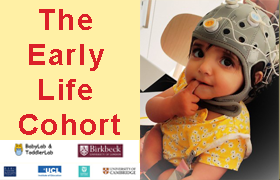
The ELC study is an exciting new collaboration with UCL and the fieldwork agency IPSOS. We are looking for 6-11 months to help us study babies’ physical, brain and cognitive development in the home.