
Tracking Early Human Development: From Basic Science to Applications
Funded by the EC Marie Curie Initial Training Networks: FP7-PEOPLE-2010-ITN PART B
Grant Number: 264301
Overview
The project provided a structured PhD training programme to prepare Early Stage Researchers for a career in public or private sector research in early developmental cognitive neurosciences. A unique feature of the project was the extensive participation of private sector partners from the technology, manufacturing and services industry in an emerging discipline that does not yet normally interact with the private sector.
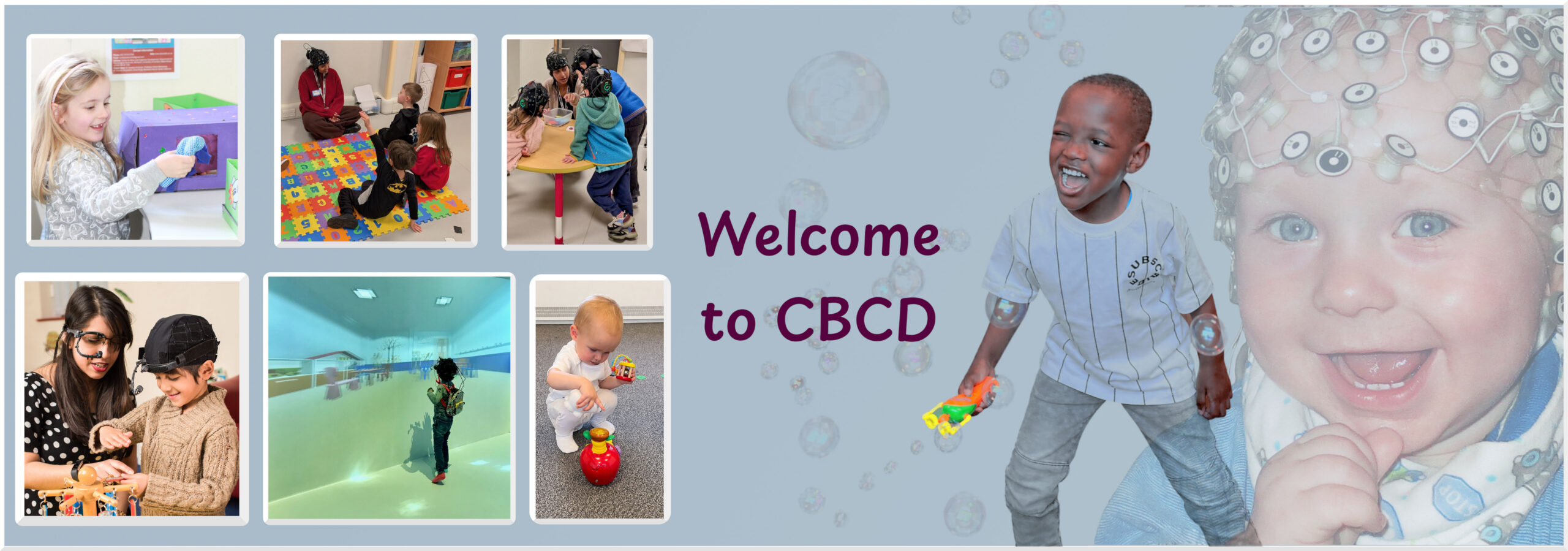
The project was primarily based at the Centre For Brain and Cognitive Development (CBCD) which holds Marie Curie Centre of Excellence in Training status, awarded by the European Commission.
Aims
The project aimed to provide the highest quality training while generating new knowledge of an international calibre. It is also intended to bridge the gap between basic research and the private sector commercialisation of discoveries. In tandem with the above it was hoped that young researchers would be encouraged to pursue careers in research in the public and private sectors. Since completion of the project all of the researchers have found research jobs in the sector.
Scientific Goals
The primary scientific aim of the project was to chart the impact that biological, and more specifically neuroscientific, constraints have on the way learning and development can unfold. The project explored the interacting effects of six different constraints:
- Gene-behaviour relations
- The role of endogenous activity in neural development
- Statistical neural information processing
- Interactive specialisation
- Embodiment
- Socialisation
Partners
P&G is a global, publicly traded Fortune 500 company, and the largest consumer packaged goods company in the world. P&G’s work is driven by a Purpose of providing branded products and services of superior quality and value to improve the lives of the world’s consumers now and for generations to come. In its German Innovation Center in Schwalbach, Germany, over 200 scientists and engineers innovate for the global Pampers brand together with 1400 families testing nappies each week.
Acuity ETS is probably the world’s leading reseller and systems integrator of eyetracking systems for academic and commercial research. They are UK based and work with researchers from the UK & Ireland, from leading universities and FTSE 100 companies to SME’s and independent researchers.
CEU is a privately funded and endowed postgraduate institution of higher education for social sciences and the humanities, with accreditation by the Middle-States Network of American Universities and, since 2006, the Hungarian Government. The Cognitive Development Center (CDC), led by Professors Gergely Csibra and György Gergely, was established in 2008 for the study of cognitive development of human infants.
The Developmental Cognitive Neuroscience Lab at the University of Padova, lead by Dr. Teresa Farroni, conducts research into infants’ visual processing bringing together visual orienting, attention and face processing studies and has expertise in both behavioural techniques and neuroimaging (EEG, ERP and NIRS) in newborns, infants and adults.
Electrical Geodesics, Inc. (EGI) develops and markets products for brain research. EGI is known for its whole-head, fMRI-compatible EEG systems with up to 256 channels for the highest resolution data. EGI’s complete Geodesic EEG Systems include the Geodesic Sensor Net; amplifiers for up to 256 channels; and software for acquisition, review, and analysis. EGI also offers an integrated source estimation and optical sensor localization system, experimental control software, integrated eye tracking systems, and polygraphic input boxes.
Abbey Home Media is a leading media independent and co-production company specialising in the ownership, development, and exploitation of intellectual property. Abbey has been at the forefront of creating quality children’s programmes for over 15 years, specialising in audio, video, DVD and books that are particularly suitable for the younger child.
The Near Infrared Spectroscopy Group in the Department of Medical Physics and Bioengineering UCL is focused on the development and application of a wide range of near infrared spectroscopy instrumentation including single and multi channel differential, spatially resolved and phase resolved systems. These systems are used to measure tissue oxygenation, haemodynamics and metabolism in a number of clinical and life science applications primary investigating brain and muscle.
Fellows
- Dan Carey
- Carina de Klerk
- Maria Laura Filippetti
- Manuela Pisch
- Kostas Papageorgiou
- Barbara Pomiechowska
- Irati Rodriguez Saez de Urabain
Communication
Communication of the project (dissemination) is a core dimension of the TRACKDEV project. It serves to promote and inform both the lay and specialist communities about the discoveries made and the activities carried out during the lifetime of the project. It is also an integral part of the training provided to the early stage researchers (ESRs). The ESRs have engaged in the following activities:
Three of the ESRs’ work featured in the following WIRED MAGAZINE article: March 2013 issue. ‘Meet London’s Babylab, where scientists experiment on babies’ brains’ and Maria Laura Filippetti, was interviewed about her work on Moebius Radio24, on 9th March 2013. In order to reach a broader audience, the ESR’s also produced podcasts (hosted on the project website) describing their work and experiences as Marie Curie fellows. Finally, several of the fellows participated in open days at the Centre for Brain and Cognitive Development, organised by the IntoUniversity charity, which targets disadvantaged teenagers to inspire them to continue their studies into higher education.
All ESRs have presented their work at national and international conferences across the EU and further abroad (giving a total of 37 poster and oral presentations). Examples include presentations at the International Conference on Infant Studies (USA), the Society for the Research in Child Development (USA), European Conference on Eye-Movements, and the Cognitive Neuroscience Society (USA). These large conference provide an opportunity to disseminate not only to other specialist scientists, but also interest members of the public, policy makers and science journalists. The work was so well received that Irati Saez de Urbain was awarded First Prize in the student software competition at the 17th European Conference of Eye Movements, Lund, Sweden for her innovative software providing an easy-to-use platform for researchers to explore and manipulate infant eye-tracking data.
As part of our dissemination strategy, we organised an end-of-event workshop, the TrackDev Symposium, in central London that attracted over 200 participants. The ESRs presented their work throughout the day. The event was book-ended by two eminent invited professors who gave a historical perspective and a future directions perspective respectively.
Although the work has already been widely disseminated, we anticipate further dissemination activities over the next 5 years. We expect that the ESRs will continue to publish both peer reviewed journal articles and generalist book chapters, as well as to present their work at further conferences and workshops, now that they have finished their Phd. All 7 have found jobs in research and will therefore continue to promote their current and future research. The impact of this project will therefore far outlast the dates of the project itself.